
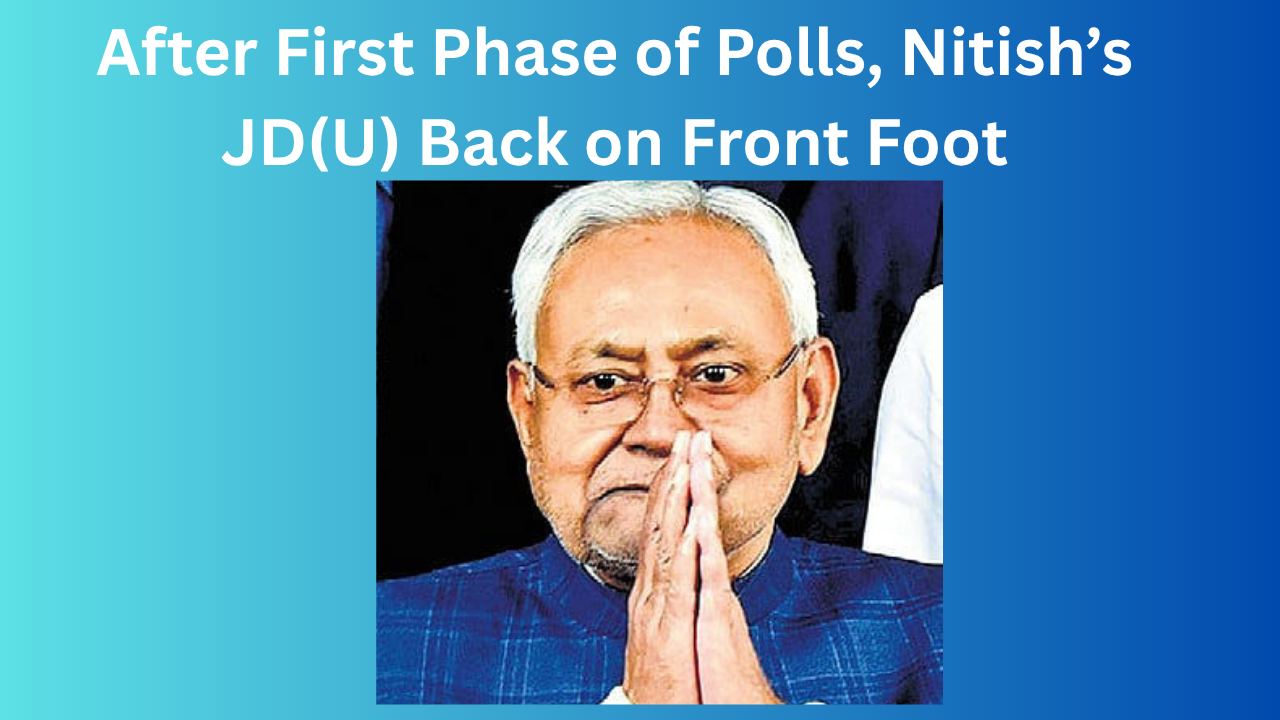
The political atmosphere in Bihar has once again captured national attention as the first phase of the assembly elections concluded. Early ground reports, voter turnout trends, and feedback from rural polling booths indicate that Chief Minister Nitish Kumar’s party, Janata Dal (United) or JD(U), appears to have regained momentum after months of speculation about its weakening position. With compelling narratives and renewed grassroots support, JD(U) now seems to be back on the front foot as the campaign moves toward the next phases.
Table of Contents
ToggleReclaiming the Narrative
For much of this election cycle, JD(U) was perceived as being on the defensive due to factors like anti-incumbency, shifting alliances, and the strong campaign push from opposition parties. However, the party’s senior leadership and local cadres appear to have turned the tide through targeted outreach and consistent messaging.
Nitish Kumar’s focus on governance achievements—particularly in areas such as rural electrification, road connectivity, women’s empowerment, and education—has resonated with voters across key constituencies. These talking points have not only strengthened JD(U)’s image but also reinforced Nitish’s long-standing reputation for stability and administrative efficiency.
Impact of Women Voters
One of JD(U)’s strongest voter bases traditionally has been women, a result of the government’s initiatives like Kanya Suraksha Yojana, reservation for women in local governance, and improved law-and-order measures. According to post-poll feedback, a significant percentage of women voters in rural and semi-urban areas continue to express trust in Nitish Kumar’s leadership.
In many villages, women acknowledged that they felt more secure and financially involved than in earlier decades. This silent but powerful voter segment is expected to influence the election outcome more than visible rallies or social media campaigns.
Shift in the Campaign Strategy
JD(U) has noticeably altered its strategy during this election compared to earlier ones. Rather than relying heavily on grand public rallies, the party prioritized booth-level coordination, local leadership activation, and door-to-door interactions. This micro-level approach allowed JD(U) to address specific community concerns, ensure turnout of loyal voters, and counter misinformation at the ground level.
Party workers also focused on first-time voters, particularly youth, by highlighting job-oriented programs, skill development schemes, and ongoing investments in the state’s infrastructure. Although opposition parties have criticized the government over unemployment, the narrative is not one-sided. A section of youth voters sees JD(U)’s stability as more dependable than the promises of abrupt change.
Alliance Dynamics
The impact of alliance politics cannot be underestimated. JD(U)’s current coalition arrangements provide it with a structured campaign presence across the map. Unlike opposition alliances that have at times seemed fragmented or ideologically stretched, JD(U)’s narrative has remained consistent: development with stability.
In places where confusion among opposition candidate selections occurred, JD(U) and its allies gained strategic advantage. Constituencies with multi-corner contests, in particular, seem to have benefitted the ruling party.
Opposition on the Backfoot?
The opposition—primarily led by RJD and its partners—continues to present a strong challenge, especially among younger and urban voters looking for employment-driven reforms. However, the first phase results indicate that the opposition has yet to unify their message on governance alternatives. While emotional appeals and large rallies generate headlines, the lack of clear administrative plans may be weakening the opposition’s overall impact.
What Comes Next?
While JD(U) appears energized after the first phase, the road ahead is still competitive. Bihar’s electoral patterns are known for shifting quickly, especially during multi-phase polls. The remaining rounds will require JD(U) to maintain strong voter engagement, avoid internal factionalism, and continue reinforcing the development narrative.
The party’s biggest strength at this stage is Nitish Kumar’s image as a leader of experience and predictable governance. If JD(U) manages to retain the confidence of women, rural communities, and older voters, the momentum from the first phase could translate into a decisive advantage.
Conclusion
The first phase of polling in Bihar has brought renewed confidence to JD(U), placing the party back on a competitive front foot. Nitish Kumar’s development-oriented messaging, organizational strategy, and grassroots connectivity are shaping the political landscape as the state moves into the next phases of voting. However, the real test lies in sustaining this momentum and converting early energy into final electoral success.